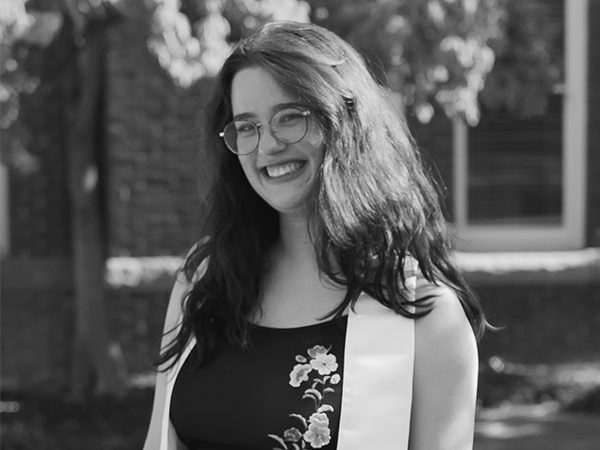
"It was the perfect storm of interest, research, and personal connection that springboarded me into diving further into global East Asian studies,” said Wenatchee Valley College staff member Ellie Camp (they/she).
Ellie, who works in the Registration Office, recently shared their knowledge of the Hwarang, an elite group of warriors and artists that once lived in the ancient Kingdom of Silla in Korea, as part of the 2025-2026 WVC Speaks Lecture Series. Founded in the early 6th century and known for their beauty, artistry, intellect, and military prowess, the Hwarang (花郞, 화랑) was tasked with bringing peace to the Buddhist kingdom of Silla ( 徐羅伐, 신라). Brought together by their morals and high stations, the group was raised with a set of ideals rooted in Confucian values, Buddhist teachings, and the traditional mysticism of indigenous museok (巫俗, 무속), or Korean shamanism. In “Founding the Hwarang: An Ancient History of Warriors, Artists, and Disciples,” Ellie examined the youths’ lifestyles and education, demonstrating the changing ideals of the sixth century and the impact of the Hwarang’s worship and spread of Buddhism on the Korean peninsula.
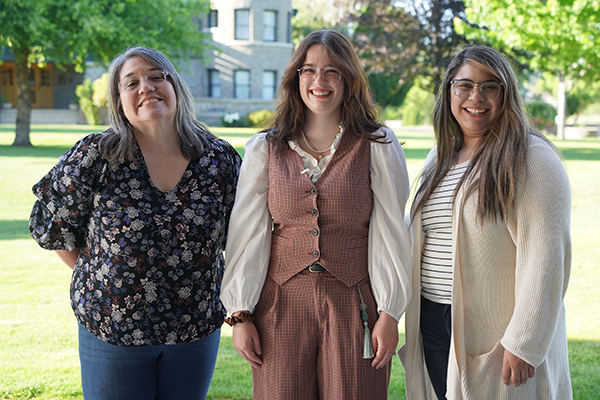 Ellie grew up in Washington state, far from the ancient stomping grounds of the Hwarang. They
became interested in the diversity of the state’s communities, and in local and state
history, particularly about Asian American experiences during World War II and into
the post-war period. Ellie began researching the Chinatown International District
of Seattle, where their family—who were from Norway and immigrated in the early 20th century—has roots. This research led Ellie into East Asian studies and to Central
Washington University, where they graduated magna cum laude with a Bachelor of Arts
in History and a minor in East Asian studies.
Ellie grew up in Washington state, far from the ancient stomping grounds of the Hwarang. They
became interested in the diversity of the state’s communities, and in local and state
history, particularly about Asian American experiences during World War II and into
the post-war period. Ellie began researching the Chinatown International District
of Seattle, where their family—who were from Norway and immigrated in the early 20th century—has roots. This research led Ellie into East Asian studies and to Central
Washington University, where they graduated magna cum laude with a Bachelor of Arts
in History and a minor in East Asian studies.
Ellie was a member of the William O. Douglass Honor College (DHC) at CWU, a place of non-traditional, seminar, and research-based learning for multi-disciplinary education. “The faculty and staff of the DHC were dedicated to supporting [their] studies, and I felt that my educational path greatly benefited from their tutelage and support,” Ellie said. “Instructors in the DHC helped me to realize that while my education level was not equal to theirs, that my research was valid, valued, and essential to diversifying the research done at CWU.”
In 2024, Ellie attended Ewha Women’s University International Summer College and completed coursework in East Asian Studies. While there, they had the opportunity to explore Seoul, but the ancient capital of the Kingdom of Silla—now the modern day city of Gyeongju—was too far for Ellie to visit. Instead, they were able to explore several museums and cultural sites, to hold reproduction clay pots from prehistoric life and to look at Three Kingdoms era pottery. “Experiencing the history that I had read about and studied for so long in a real and meaningful way was a life-changing experience,” Ellie said. “Seeing such a material display of thousands of years of cultural and artistic development in the span of a week was incredible.”
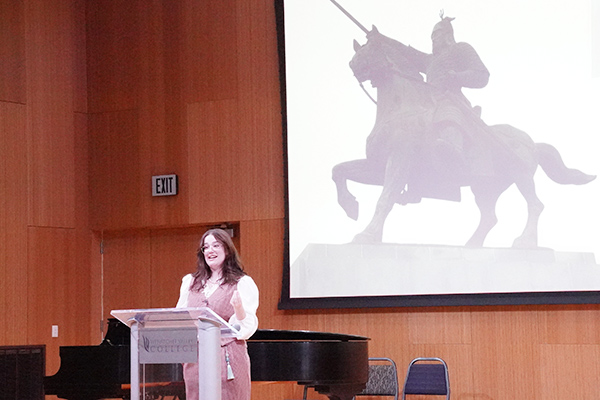 In sharing their knowledge of the Hwarang, Ellie hoped “to impart...the importance
of recontextualizing historic groups in terms of their holistic importance to a culture
or events and deepen their understanding of Korean history and culture.”
In sharing their knowledge of the Hwarang, Ellie hoped “to impart...the importance
of recontextualizing historic groups in terms of their holistic importance to a culture
or events and deepen their understanding of Korean history and culture.”
“Now more than ever, the study of diverse histories and cultures is vital to our understanding of the world we live in,” Ellie said. “Not only is it important to explore the breadth of global history, but the way in which it is taught and explored through different cultural lenses.”
Ellie would like to continue their education in history one day, particularly at an overseas institution. “For now, I am happy to be back home in the Wenatchee Valley and working here at WVC,” they said.
To watch Ellie’s WVC Speaks presentation on “Founding the Hwarang: An Ancient History of Warriors, Artists, and Disciples,” visit the college’s YouTube channel.